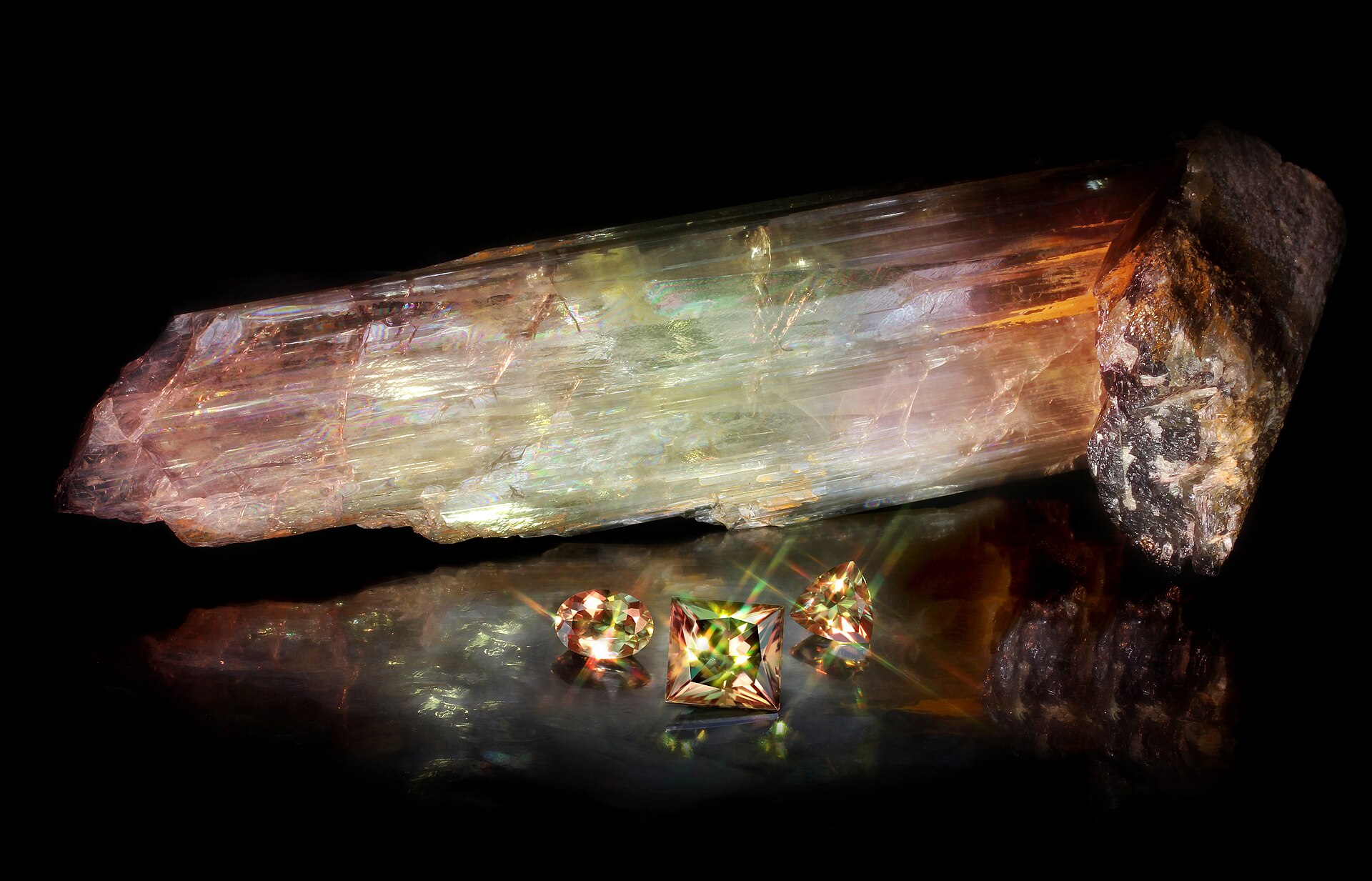
Zultanite: A color-changing gemstone found exclusively in Turkey.
In the daylight, zhak green; in artificial light, rose malachite: zultanite, one of the rare stones that changes color, and its source is limited to a single mine in Milas district, Muğla, Turkey. We are discovering this gemological treasure unique to Türkiye.
Here’s a translation of the provided text into English, adhering to all specified rules and guidelines:
Zultanite is likely what you’re looking at if a stone has two colors and you can determine which one is genuine by examining it under different lighting conditions. In daylight, this color ranges from a khaki-like yellowish green, but under artificial light, it suddenly shifts to rose pink, azure, or even lavender. This optical phenomenon—color change or, in gemological terms, “color change”—has placed zultanite among the world’s rarest stones, and its uniqueness is further enhanced by the fact that its only source is Turkey.
Mineralogically known as diaspore (diaspore), this stone is composed of aluminum hydroxide oxide and has a Mohs hardness rating between 6.5–7. The commercial name “Zultanite” in Turkey emerged in 2005, when Turkish investors began operating the mine in Milas, Muğla province. This name was chosen as a reference to Ottoman sultans and eventually evolved into a branded stone name in the global gem market. While diaspore formations are known elsewhere in the world, it is only found in jewel-quality form—large, transparent, and suitable for cutting—from the Milas deposit.
The mechanism behind the color change relies on a delicate balance point within the stone’s light absorption spectrum. The manganese and chromium traces present in diaspore reflect different parts of daylight (shorter wavelengths, blue-dominant) and artificial light (longer wavelengths, red-yellow dominant). Thus, the same stone appears as a diluted forest green in morning sunlight while it transforms into a warm rose tone under a nightlight. Gemologists refer to stones like these—along with alexandrite and some garnet varieties—as “chameleon stones,” and the sharpness of the color change is a primary measure of quality classification.
From a market and collector’s perspective, zultanite has experienced a dramatic rise in popularity over the past twenty years. Jewel designers particularly favor it in large stones because the color change becomes more dramatically apparent as carat weight increases. In smaller stones (0.5 carats or less), the color transition is relatively faint, while in 3–5-carat and larger specimens, the difference between the two colors can be striking. Clarity and cut quality are considered alongside color change; a good cut ensures that the stone distributes light most efficiently in both types of lighting.
This stone, which originates in Turkey, has yet to fully establish itself within Turkish jewelry culture; zultanite is closely followed by international buyers and collectors, while it is primarily exported domestically. However, this stone is a chemical miracle of Anatolian soil: a mineral created only through the combination of the correct pressure and temperature, achievable over millions of years of geological history. A zultanite worn in a ring or pendant is not just a jewel; it’s a small treasure from the red soils of Milas—a stone that stands between two lights and offers each one a different color.